
 by
by There’s a version of New Zealand architectural history written in corrugated iron. The old woolsheds with their rusted peaks. The bach rooflines on the Coromandel. The mid-century bungalows that still sit in every Auckland suburb, their corrugated profiles intact after sixty, seventy, eighty years.
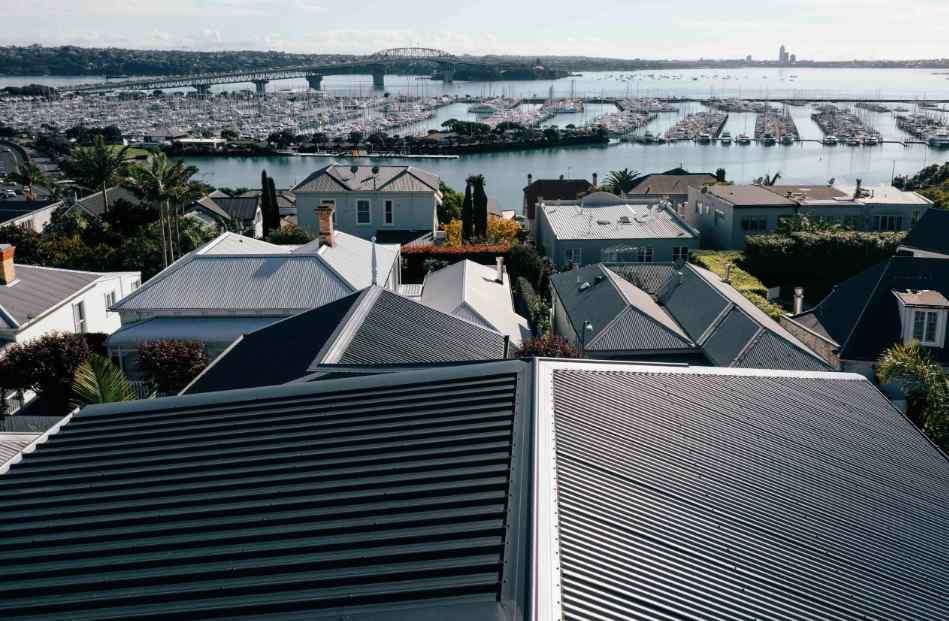
Corrugated fell out of fashion for a while — the 1990s and 2000s saw longrun trapezoidal profiles dominate new builds, partly for performance reasons and partly because corrugated read as old. Then architecture moved on, and suddenly the classic profile was exactly what high-end residential designers wanted again. Corrugated is now specified on architecturally designed homes in Herne Bay and Remuera that would have used standing seam a decade ago.
The aesthetic shift is real. But the reason corrugated has lasted longer than any other roofing profile in New Zealand isn’t style. It’s engineering.
Why the Wave Profile Works
The corrugations aren’t decorative. They’re structural.
A flat steel sheet of a given gauge has a specific load-bearing capacity. Introduce a repeating wave profile into the same sheet and that capacity increases significantly — the geometry distributes load across the corrugations rather than concentrating it across a flat plane. The same principle is used in cardboard packaging, structural concrete formwork, and some lightweight structural panels. It’s one of the most efficient structural shapes in materials engineering.
For roofing, this translates to a profile that handles wind loading, snow load where relevant, and the weight of foot traffic during installation and maintenance without the gauge penalty a flat profile would require. Corrugated roofing remains structurally efficient when specified within the correct span tables and fixing requirements. in some applications — which affects both material cost and the load on the structure beneath.
The wave profile also handles water differently from ribbed or trapezoidal alternatives. The continuous curve sheds water across the full width of each sheet rather than channelling it into defined ribs. On a well-pitched roof, this means faster drainage and fewer points where standing water can develop. On lower-pitch applications — where the minimum pitch for corrugated is 8 degrees after deflection — the profile’s drainage characteristics are a genuine performance factor, not just an aesthetic one.
What Auckland Corrugated Suppliers Actually Stock
Not all corrugated is the same product. The profile may look consistent but the steel underneath varies considerably — and the difference matters significantly in Auckland’s environment.
Colorsteel Endura carries a higher-specification coating system with an extended warranty, designed specifically for moderate-to-high corrosion environments. For properties within a kilometre or two of the Waitemata, the Manukau, or the west coast, Endura is the specification that makes long-term sense. The price difference between Maxx and Endura is modest. The performance difference over twenty years in a coastal location is not.
Colorsteel Maxx is the standard residential-grade product — pre-painted steel with a zinc/aluminium alloy coating and a quality paint system. Suitable for most inland Auckland properties, it is the standard specification for straightforward re-roofing projects.
Colorsteel Endura and Maxx are both manufactured in New Zealand by NZ Steel — which is relevant not just as a provenance point but as a warranty consideration. The NZ Steel coastal warranty classification system accounts for Auckland’s specific salt air zones. A roofing supplier in Auckland specifying the correct product grade for a coastal site is doing something that protects the client’s investment for decades. One specifying Maxx on a coastal property to save a few dollars on the quote is doing the opposite.
Dimond, Metalcraft, and Steel & Tube are the primary distribution channels for these products across Auckland. The quality of the installation — how sheets are fixed, how laps are detailed, how flashings are formed — matters as much as the product itself. Corrugated roofing installed with incorrect lap allowances or inadequate fastener patterns will leak regardless of how good the steel is.
Corrugated as Cladding — The Angle Most People Miss
The corrugated profile has moved well beyond roofing in contemporary New Zealand architecture.
Vertical corrugated steel cladding — run vertically rather than horizontally, in profiles designed for wall applications — is now a standard specification on architecturally designed homes, commercial buildings, and industrial fitouts. The aesthetic is clean, distinctly New Zealand, and increasingly mainstream.
This matters for anyone working with a roofing supplier in Auckland for a project that involves both roofing and cladding. Continuity of profile and colour between the roof plane and the wall plane creates a coherent exterior that reads as deliberate. Mixing profiles — corrugated on the roof, trapezoidal on the walls — can work, but it requires the design to account for the difference rather than ignore it.
The supply chain for roofing and cladding corrugated is largely the same. A supplier who handles both can manage colour consistency, batch matching, and profile continuity across a project in a way that ordering from separate sources cannot.
Frequently Asked Questions
What is the minimum pitch for corrugated roofing in New Zealand? Eight degrees after deflection for sheet runs up to 30 metres, nine degrees for runs between 30 and 50 metres. These minimums assume peak rainfall of 100mm per hour or less. Below minimum pitch, water can penetrate side laps and flashings regardless of installation quality. If a roof is borderline on pitch, a trapezoidal or standing seam profile with better low-pitch performance characteristics is a safer specification.
How long does corrugated Colorsteel roofing last in Auckland? Colorsteel Maxx carries a warranty of up to 30 years in standard environments. Colorsteel Endura extends this in moderate-to-high corrosion zones. Real-world performance in non-coastal Auckland locations routinely exceeds warranty periods. Coastal properties see faster degradation with standard-grade products — which is why the coastal classification matters before specifying.
Can corrugated roofing be used as wall cladding? Yes — using profiles specifically manufactured for vertical wall application. Yes, provided the profile, fixing details and manufacturer guidance are suitable for wall cladding. Profile dimensions, fixing details, and fastener specifications differ between roofing and cladding applications.
How do I choose between corrugated and trapezoidal profiles for my Auckland home? Corrugated suits traditional, heritage, and contemporary architectural styles that want a distinctly NZ character. Trapezoidal profiles suit lower-pitch modern builds and industrial applications. For most re-roofing projects replacing an existing corrugated roof, like-for-like corrugated is typically the appropriate choice. Changing profiles on a re-roof involves different flashing details and sometimes different batten spacing — it’s not a simple substitution.
Does corrugated roofing require more maintenance than other metal roofing? Not materially, with one exception. The profile’s water-shedding characteristics mean organic debris — leaves, moss — tends to accumulate in the valleys of the corrugations more readily than on ribbed profiles. Periodic cleaning, particularly under tree canopy, is more important on corrugated than on smoother profiles. This is maintenance, not failure — and it’s straightforward to manage.
The Profile That Earned Its Place
Corrugated roofing didn’t survive a century of New Zealand architecture by being fashionable. It survived because the wave does something flat steel can’t — carries load efficiently, sheds water reliably, and holds its form over decades of thermal cycling and weather exposure.
The contemporary architectural enthusiasm for the profile is well-founded. But the reason to specify it from a quality roofing supplier in Auckland isn’t the aesthetics. It’s the sixty-year track record on the house next door.


